5 ways to stay connected as a family

For Sakura and her husband Samuel, family time is a balance of individual hobbies and interests, while reinforcing the strength of their kapa (team) as they navigate the diverse needs of their four children: daughters Ahavah, 7, who is autistic and non-verbal, and Adonai, 5, who has kidney failure, and sons Elohim, 4, and Tzevaot, 21 months.
Here Sakura breaks down the five approaches that work for her whānau.
1. Make it easy and routine
Activities with simple travel requirements are easiest to fold into the family routine.
Sakura’s boys go to a Pasifika early childhood centre which includes monthly celebrations of language and culture with the sharing of kai. She says it’s a relaxing way to socialise and meet other people, without having to go to a different location or event.
“We also try to make the most of the extracurricular lessons at my daughters’ school,” says Sakura. “Utilising what’s available on site means Adonai can stay there after class for her violin lessons while I can still be at home with my other children for the afternoon. If the weather permits, sometimes we can make it a family walk when we pick Adonai up—that way we’re all getting some exercise and fresh air.”
2. Go slow and take breaks
With four young children, routine is important for Sakura, but she also knows to take cues from their energy levels.
“We prefer the kids do activities during the week, as usually by Friday we’re worn out and need the weekends as a time to reset. Things like weekend sport can be tricky when some of your kids have special needs. As parents, we also need time to relax and take things at a slower pace.”
“We try to go to church on Sundays, but sometimes we’re too worn out, especially if we’ve been up and down the night before taking Adonai off the electrolyte pump when she needs to go toilet. Due to recent seizures, Ahavah also needs monitoring when sleeping, bathing and swimming until she can see a specialist.”
“All we can do is be open and honest about our lifestyle with our community, and fortunately they’re really understanding.”
3. Find common interests
While Sakura’s family are active in the community, she says it’s important to find common ground when choosing joint activities at home that recognise her children’s strengths and interests.
“Our children are a mix of ages, interests and verbal and non-verbal communication styles. Some are very sociable, and others very introverted, so it’s about finding things that everyone can take part in.”
This often means low-demand activities like watching movies and listening to music.
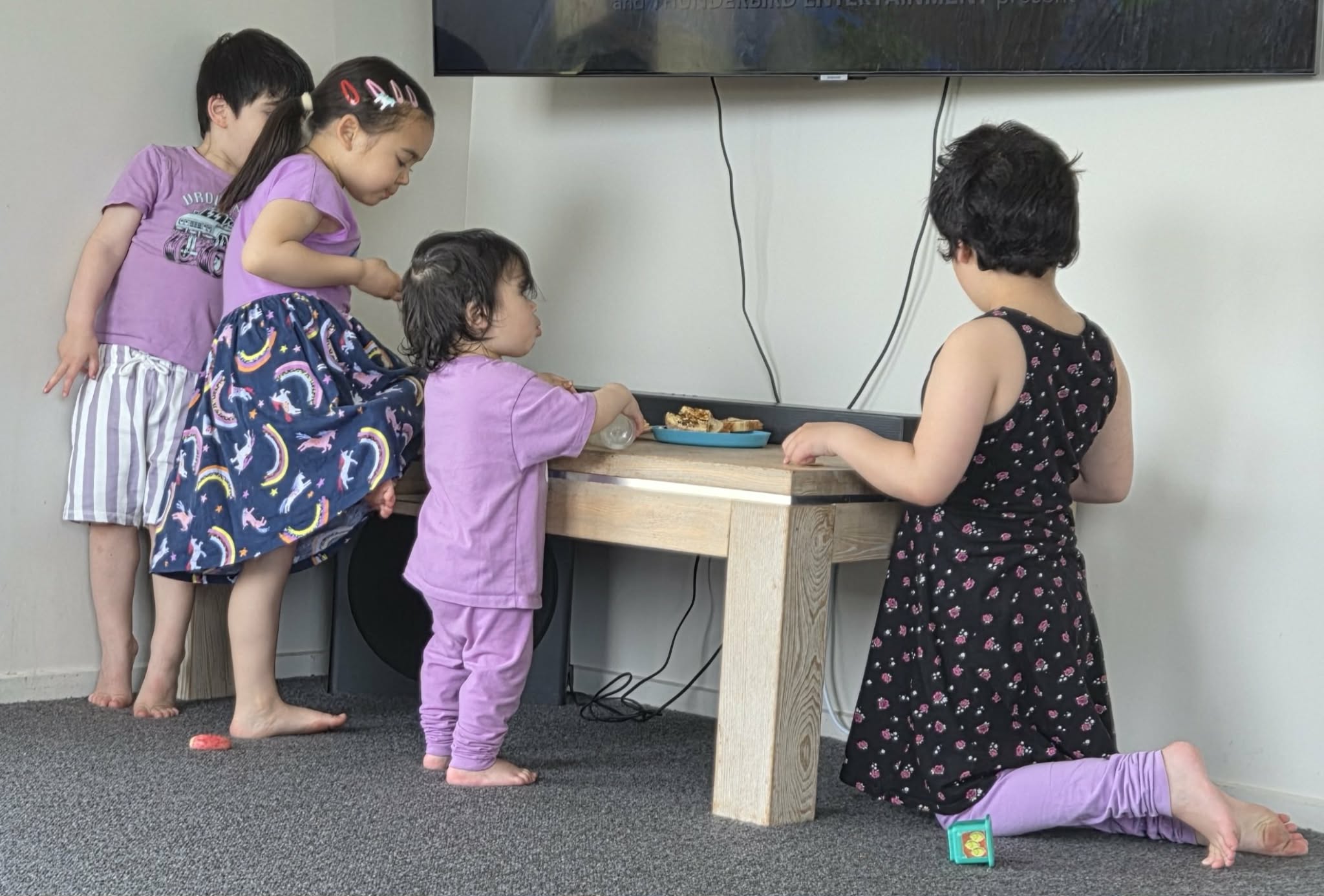
“Animated movies are best, because Adonai can sing and dance along, while Ahavah can stim to the sound of the music from her ‘zone’ on the couch. My son who loves reading can bring his books and musical toys to the lounge and join in too, and the baby can ride around on his trike.”
Sakura says parents should expect some trial and error, but that’s okay, as it just means you’ll know to try something different next time.
“Be prepared to take breaks or change the sensory experience if needed,” she says.
4. Encourage siblings to be understanding and ask questions
It’s important to Sakura that her children learn to be empathetic, and that her sons understand that their sisters interact with the world in unique ways. She and her husband do this by teaching their children to navigate life’s challenges as a team.
“When watching movies, sometimes certain sounds can be a bit overwhelming for Ahavah, but her siblings are really understanding,’ says Sakura. ‘They know she’s sensitive to sound, which she signals by covering her ears. Adonai might notice that and adjust the volume, understanding that her sister needs to feel okay too. Or their little brother Tzevaot will show compassion by gently patting her when she gets overwhelmed. That kind of affirmation is important.”
5. Carve out alone time
The family prioritises reset moments so that everyone can recharge. For their autistic daughter Ahavah, this includes playing with sensory toys, putting on her favourite music, and opening a window for airflow. For Adonai, who has medical needs post-kidney transplant, they balance her care with her love for sports, performing arts, and quiet crafts.
As Sakura and her husband Samuel are full-time carers, they also understand the importance of down time for themselves, and credit it with helping them through tough times. Before COVID lockdowns and before spending a lot of time at Starship when Adonai got sick, they used to run their own business. They have also experienced the loss of two sons, one of whom was diagnosed with Edward Syndrome in the womb, whose memory they honour as a family.
“There have been a lot of tears,’ says Sakura, ‘but through navigating our challenges we’ve become stronger as individuals and in our marriage. We became good at knowing when we need to spend time together, even if it’s just 30 minutes.”
“We talk about our goals and make plans for running our own businesses again someday. I think it’s important for our children to see what we’re capable of. It almost feels like a form of respite for us, spending time together talking about what we can give back to society and to our tamariki.”
Helpful materials
Some resources you might be interested to borrow about neurodivergence and disability through a Māori lens.
.jpg)